Figure From the Ancient Future
Limassol Municipal Art Gallery, Cyprus
12 March – 30 May 2022
Figure From the Ancient Future unfolded at the Limassol Municipal Art Gallery with a quiet intensity, subtly altering the perception of time and space within the exhibition halls. The works created an environment where the ancient and the speculative coexisted without hierarchy, inviting visitors into a temporal suspension in which history felt unsettled and open-ended.
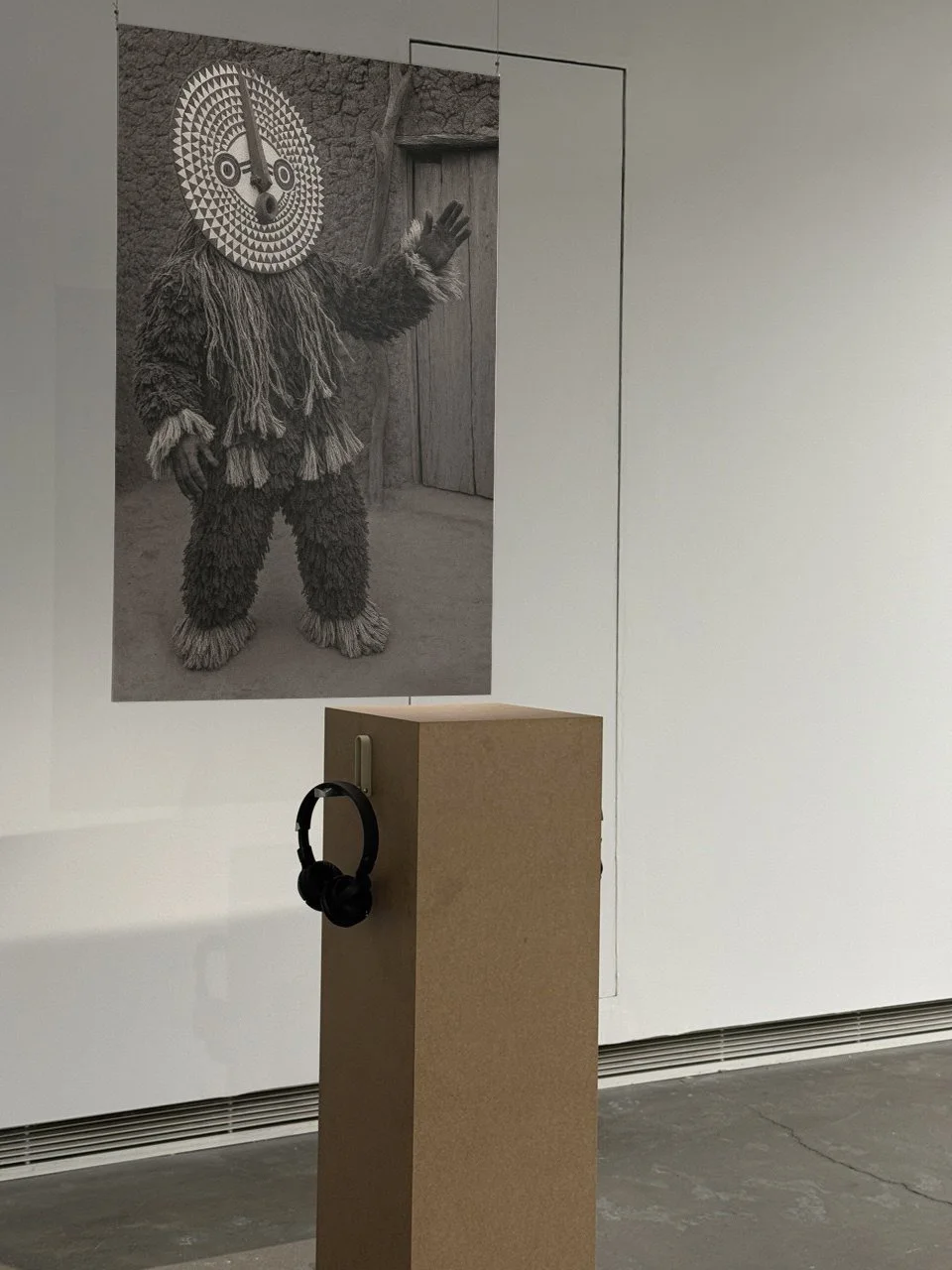
At the centre of the exhibition was a large monochrome photograph depicting a solitary effigy. Wrapped in textured fibres and wearing a circular patterned mask, the figure resisted immediate interpretation. Its raised, gloved hand hovered between greeting and refusal, offering a gesture that remained deliberately unresolved. The image did not reconstruct a specific tradition or ritual; instead, it proposed a form of identity detached from ethnographic certainty—assembled, carried, and continually reconfigured rather than inherited.
Presented in Cyprus, a place marked by layered histories, divisions, and contested narratives, the work gained additional resonance. The effigy claimed no local origin, yet it echoed the island’s ongoing negotiations of belonging and displacement. It occupied a space between familiarity and estrangement, refusing to settle into categories of native or foreign, past or present.
Beneath the photograph, a simple sound installation extended the figure’s presence beyond the visual. Through headphones, a near-silent soundscape emerged: soft rustling, measured breathing, the friction of movement. Without language or melody, the audio functioned as a residue of ritual—an indication of presence without representation. Listening became an act of attentiveness, drawing viewers into a slower, more embodied encounter.
Throughout the exhibition, folklore appeared not as decoration or heritage, but as a living, adaptive structure. Drawing from pre-Christian Slavic, Finno-Ugric, and steppe-based ritual fragments, Varvara approached folklore as a technology of survival rather than a fixed tradition. These elements were treated as tools capable of generating new futures, rather than symbols bound to the past.
The monochrome palette reinforced the exhibition’s temporal ambiguity. The photograph appeared archival yet belonged to no identifiable archive, undermining photography’s authority as a classificatory medium. The effigy was not presented for study; instead, it resisted legibility, reversing the usual direction of the gaze. The encounter prompted reflection on the desire to categorise and stabilise identity, asking what remains when those structures fall away.
As the exhibition progressed, the effigy began to feel less like an object and more like a presence inhabiting the gallery. Its ambiguity, its restrained soundscape, and its refusal to resolve into meaning formed a quiet resistance to clarity and closure. Rather than confronting imperial narratives directly, the work offered an alternative mode of opposition—one grounded in opacity, fragility, and endurance.
Figure From the Ancient Future proposed identity as something most alive when it remains unresolved. The exhibition invited viewers to dwell within uncertainty, to experience ambiguity not as absence or threat, but as a fertile space for imagining futures unbound by borders or inherited narratives.
Venue: Limassol Municipal Art Gallery