Apparitions in the Time After Empire
La Borne Gallery, France
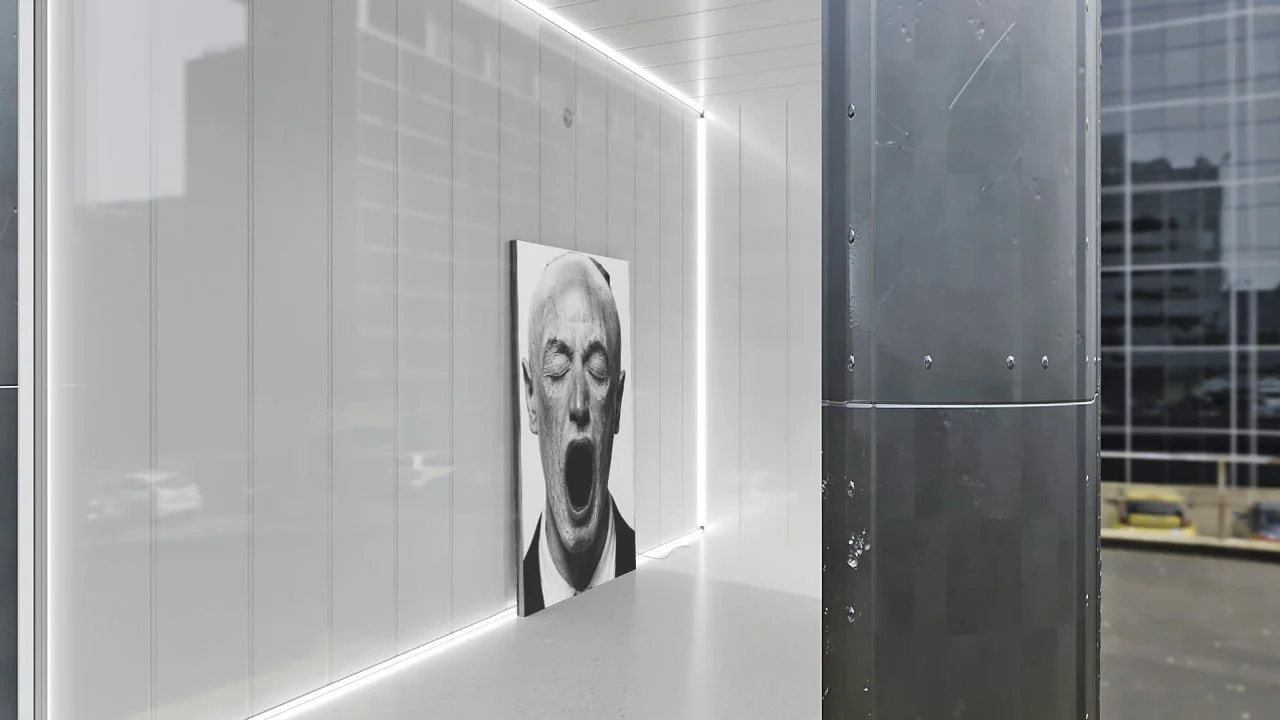
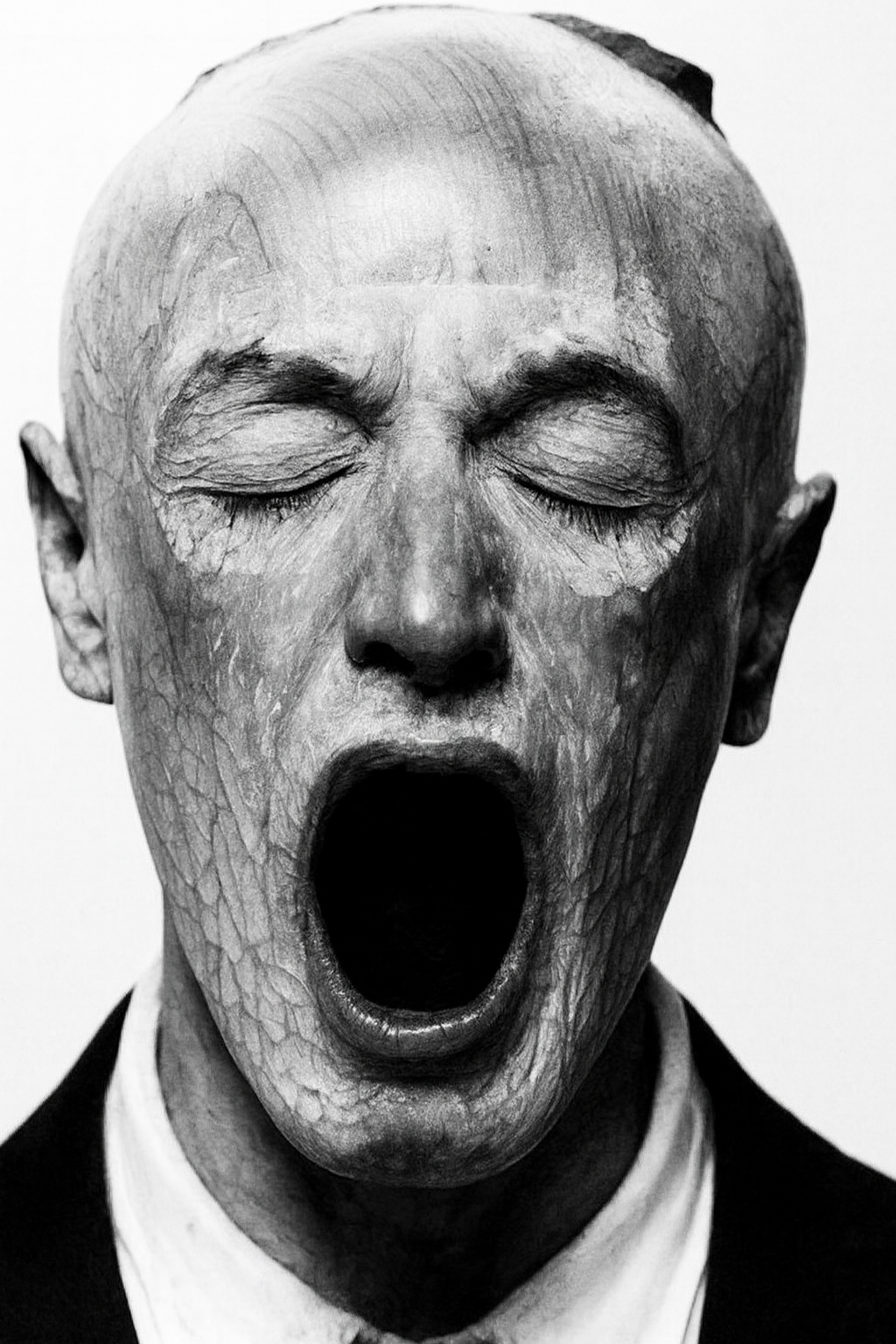
Encountering the monumental, fractured face that fills the window of La Borne, one has the sense of being directly addressed—summoned by something older than the present and marked by deep historical rupture. The open mouth, suspended mid-cry, is not theatrical but elemental. It evokes a form of expression that precedes language and survives it: the silent articulation of histories that resist erasure.
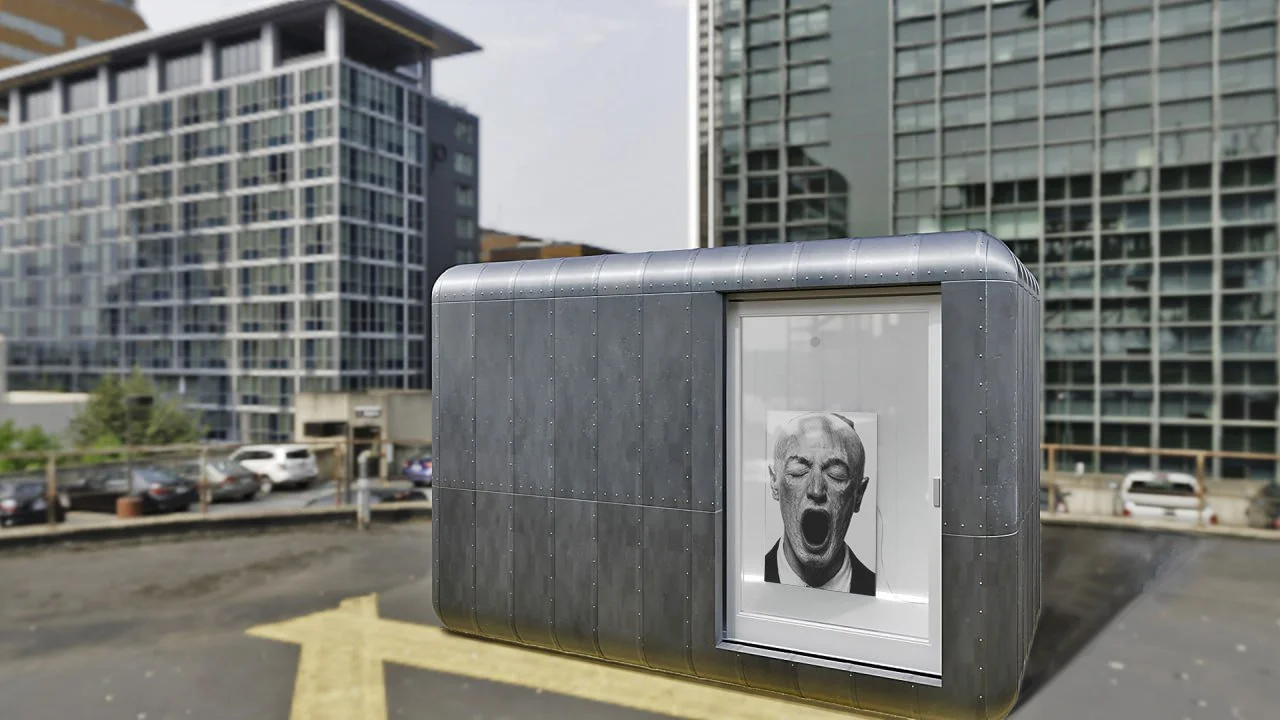
La Borne’s mobile architecture intensifies this encounter. Designed by architect Bertrand Penneron, the structure travels through the Centre-Val de Loire region as a transient threshold between art and public space. Neither conventional gallery nor temporary installation, it interrupts everyday life, placing the artwork in direct dialogue with its surroundings. Art does not wait to be entered; it looks outward, insisting on engagement.
This setting closely mirrors Varvara Dmitrieva’s exploration of post-imperial subjectivity. Born in Moscow in 2001 and shaped by life between Italy and the United Kingdom, Dmitrieva belongs to a generation for whom empire is not history but lived inheritance. The central image—a head whose cracked surface recalls parched earth and dried riverbeds—captures a moment after catastrophe, when loss is fully present but language has not yet returned.
Without aestheticising violence, the work inevitably resonates with the ongoing war in Ukraine. The ruptured mouth becomes a counter-monument to imperial aggression: a face stripped of national markers, impossible to claim, mourning beyond borders. It resists state narratives and refuses to prioritise whose suffering is visible.
Dmitrieva’s analogue practice is integral to this resistance. Trained at Photofusion in London, she approaches analogue photography as a politics of slowness. Long exposures, hand-calibrated tones, and tactile material processes oppose the rapid circulation and erosion of contemporary conflict imagery. Her large-scale prints feel less like documents than living surfaces—images that breathe, weather, and endure.
Installed within La Borne’s itinerant structure, the work becomes a public interruption. Set against civic architecture and everyday movement, it exposes the persistence of imperial violence within Europe’s present. The exhibition’s mobility echoes displacement itself—bodies and identities in motion—without resorting to illustration or didacticism. Meaning emerges through resonance rather than explanation.
At its core, Apparitions in the Time After Empire is an invitation to unlearn imperial ways of seeing. The open mouth does not scream; it holds space. It refuses closure, mastery, or consumption. Instead, it asks for a slower, more accountable gaze—one that recognises damage without turning it into spectacle, and grief without instrumentalising it.
Presented as a fleeting yet insistent presence, the exhibition offers no consolation. What it proposes instead is attentiveness: a moment where history’s wounds are neither hidden nor aestheticised, but quietly acknowledged as a condition that must be seen before it can be transformed.
Apparitions in the Time After Empire was presented at La Borne, Le Plessis-Botanique, La Riche, Centre-Val de Loire, from 23 November to 13 December 2025.